

“`html
Is Home Improvement Still Relevant? The Evolving Landscape of Home Equity and Lifestyle
In an era defined by fluctuating interest rates, rising material costs, and a cooling real estate market, many homeowners are asking a critical question: Is home improvement still relevant? A decade ago, the answer was a resounding “yes” fueled by cheap credit and a booming market. Today, the motivation has shifted from speculative flipping to long-term value and personal utility.
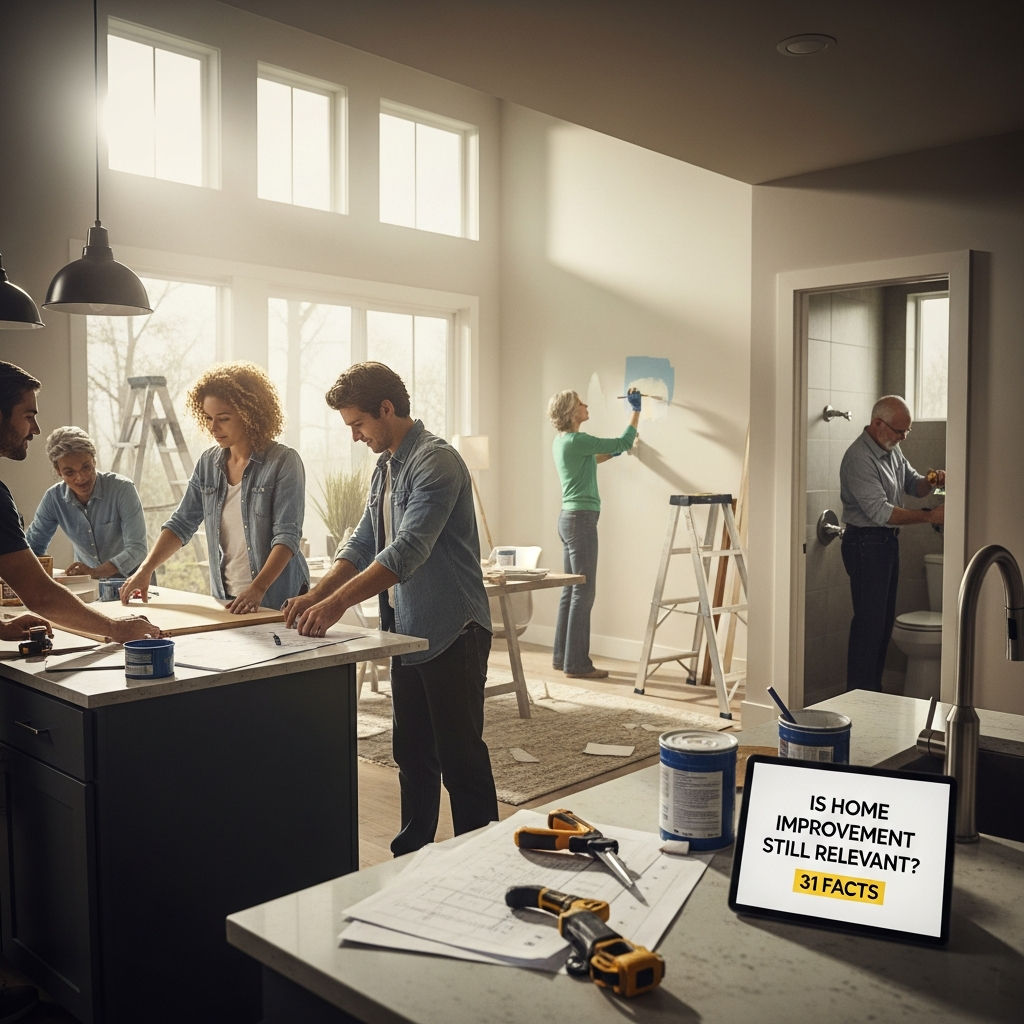
Home improvement is no longer just about aesthetic upgrades; it is a strategic response to economic pressures and changing lifestyle demands. Whether it is transforming a spare room into a high-tech home office or upgrading insulation to combat rising energy bills, the industry remains more vital than ever. In this comprehensive guide, we explore the current state of the industry through 31 undeniable facts that prove renovation is still a cornerstone of modern homeownership.
The Shift from Moving to Improving
With mortgage rates significantly higher than the pandemic lows, many homeowners are “locked in” to their current low rates. This has created a “stay put” mentality. Instead of selling to find a house that meets their needs, people are investing in their current properties to adapt to their evolving lives. This shift has ensured that the home improvement sector remains resilient, even when the broader housing market slows down.
31 Facts Proving the Relevance of Home Improvement
Economic and Market Facts
- 1. The Industry is Massive: The U.S. home improvement market is valued at over $500 billion annually, showing that consumers continue to prioritize their living spaces despite economic headwinds.
- 2. ROI varies by Project: While not all renovations offer a 100% return, minor kitchen remodels and garage door replacements consistently recoup over 70-90% of their cost upon resale.
- 3. Curb Appeal Matters: First impressions are everything. High-quality landscaping or a fresh front door can increase a home’s perceived value by up to 7% immediately.
- 4. Maintenance vs. Improvement: Deferring maintenance can lead to a 10% decrease in a home’s total value. Regular improvements prevent “equity bleed.”
- 5. The “Lock-in” Effect: Over 60% of homeowners with mortgages have a rate below 4%. This makes renovating existing homes more financially viable than buying a new one at 7% interest.
- 6. Refinancing Alternatives: Home Equity Lines of Credit (HELOCs) remain a popular way to fund renovations, allowing owners to tap into trillions of dollars in untapped home equity.
Lifestyle and Functional Facts
- 7. The Remote Work Revolution: Approximately 25-30% of the workforce continues to work from home at least part-time, making dedicated home offices the #1 requested renovation.
- 8. Multi-Generational Living: Nearly 20% of the U.S. population now lives in multi-generational households. Adding “ADUs” (Accessory Dwelling Units) or basement apartments is a growing trend.
- 9. Mental Health Impact: Studies show that organized, aesthetically pleasing environments reduce cortisol levels and improve overall mental well-being.
- 10. Kitchens are the Heart: The kitchen remains the most renovated room in the house, as it serves as a social hub and a primary driver of property value.
- 11. Outdoor Living Spaces: Since 2020, demand for “outdoor rooms,” including deck extensions and outdoor kitchens, has increased by over 40%.
- 12. Aging in Place: As the “Baby Boomer” generation ages, renovations focused on accessibility (curbless showers, wider doorways) are becoming essential for long-term residency.
Energy and Sustainability Facts
- 13. Energy Efficiency is Profitable: Homes with high energy-efficiency ratings sell for 2% to 5% more than standard homes.
- 14. The Rise of Solar: Residential solar installations have grown by roughly 15% year-over-year, driven by tax credits and a desire for energy independence.
- 15. Insulation ROI: Adding attic insulation is one of the few home improvements that often provides a 100% return on investment in terms of energy savings and resale value.
- 16. Smart Home Integration: Over 60 million households in the U.S. now use smart home devices, ranging from thermostats to security systems, which are increasingly seen as “standard” rather than “luxury.”
- 17. Water Conservation: Low-flow fixtures and drought-resistant landscaping (xeriscaping) are becoming critical renovations in drought-prone regions.
- 18. HVAC Upgrades: Modern heat pumps can reduce electricity use for heating by approximately 50% compared to electric furnaces and baseboard heaters.
The DIY and Professional Labor Market
- 19. The DIY Boom: YouTube and TikTok have democratized home improvement, with 70% of Millennials attempting at least one major DIY project in the last year.
- 20. Skilled Labor Shortage: Despite high demand, there is a shortage of skilled tradespeople, leading to longer wait times and higher costs for professional renovations.
- 21. Professional Oversight: While DIY is popular, 60% of homeowners still prefer hiring professionals for electrical, plumbing, and structural work for safety and code compliance.
- 22. Digital Design Tools: The use of AR (Augmented Reality) and 3D modeling tools has made it easier for homeowners to visualize projects before spending a dime.
Resale and Appraisal Facts
- 23. Appraisal Gaps: Renovated homes are less likely to suffer from “appraisal gaps” where the bank values the home lower than the sale price.
- 24. Faster Sale Times: Modernized homes spend an average of 15-20 days less on the market than homes requiring “TLC.”
- 25. Neutrality Wins: While personal style is important, using neutral colors and materials in renovations yields a higher ROI for resale.
- 26. Bathroom-to-Bedroom Ratio: Homes with at least a 2:1 bedroom-to-bathroom ratio are significantly easier to sell in suburban markets.
Future Trends and Statistics
- 27. Health-Centric Renovations: Features like air purification systems and touchless faucets are seeing a 25% increase in specification by architects.
- 28. Sustainable Materials: Usage of reclaimed wood, recycled metal, and cork flooring is projected to grow as consumers become more eco-conscious.
- 29. Soundproofing: As homes become multi-functional (gym, office, school), acoustic insulation and soundproofing have become top-ten renovation priorities.
- 30. Small Space Optimization: With the rise of “tiny living” and urban apartments, custom cabinetry and “transformer furniture” renovations are on the rise.
- 31. Resilience Renovations: In climate-vulnerable areas, homeowners are investing in impact-resistant windows and reinforced roofing to lower insurance premiums.
Why the “Wait and See” Approach Might Cost You
Many homeowners are waiting for material prices or interest rates to drop before starting their next project. However, historical data suggests that construction costs rarely see significant decreases; they typically plateau before rising again. By delaying essential improvements or energy-efficiency upgrades, homeowners miss out on the immediate benefits of lower utility bills and improved quality of life.
The ROI of Joy
While financial ROI is a major factor, the “Joy Score”—a metric used by the National Association of Realtors—measures the happiness a project brings to a homeowner. Projects like complete kitchen renovations and new wood flooring consistently receive a “Joy Score” of 10/10. In 2024 and beyond, the personal satisfaction derived from a tailored living space is a valid and vital reason for the relevance of home improvement.
Conclusion: A Sound Investment in Uncertain Times
Is home improvement still relevant? The facts speak for themselves. Beyond the financial gains and the protection of one’s largest asset, home improvement allows individuals to adapt their environments to a rapidly changing world. From the necessity of the home office to the urgency of energy efficiency, the drive to better our living spaces remains a fundamental aspect of the human experience and a savvy economic strategy.
Whether you are looking to sell in six months or stay for sixty years, investing in your home is an investment in your future. By focusing on projects that balance high ROI with personal utility, you ensure that your home remains both a sanctuary and a powerhouse of equity.
“`